In conversation with Global Perinatal Services
One of the most harmful stereotypes about birth doulas is that they are a luxury reserved for affluent moms with a comfortable disposable income. Whilst these voices drive the conversation around the benefits of doula care, they do not represent the whole picture. Global Perinatal Services (GPS) is a counterpoint to this narrative, providing pregnancy, birth, postpartum, and family support to families across Washington, with a focus on Black, immigrant, refugee, and historically underserved communities. Crucially, their doulas speak 22 different languages, meaning moms and their families are able to express themselves and be understood in their mother tongues. GPS works to reduce financial and systemic barriers to care and helps families access services regardless of their circumstances, giving underserved populations access to a quality of care that would not otherwise be available to them.
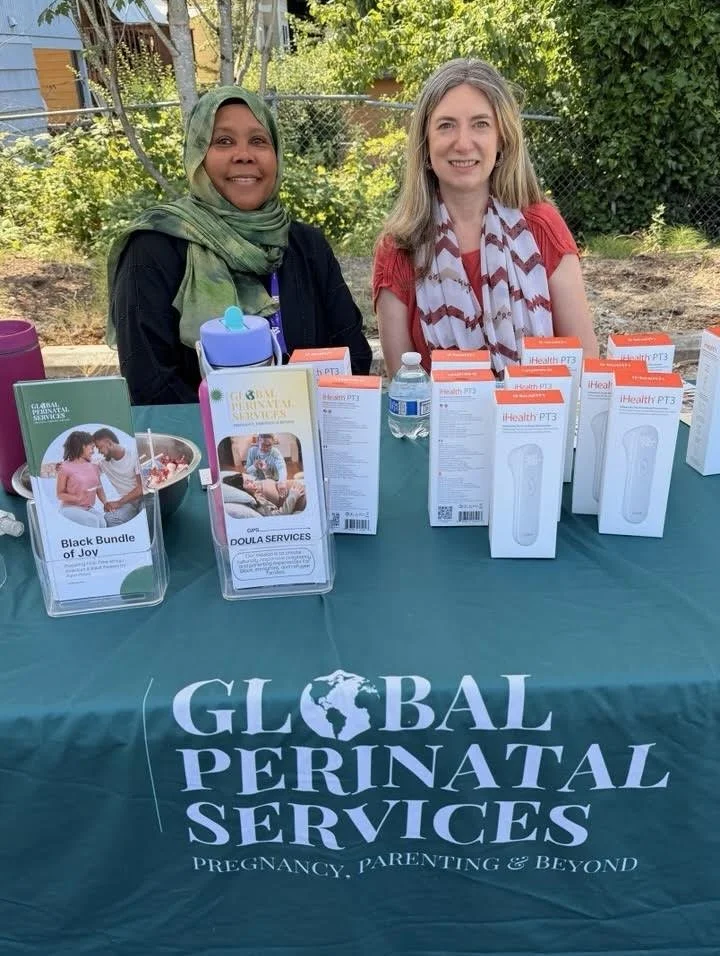
GPS began in response to a disturbing trend noticed by Faisa Farole, a Somali-born midwife and mother:
Somali women in Washington state were giving birth in hospital rooms where no one spoke their language, and were experiencing disproportionately high rates of c-sections.
Farole wanted to help her community in the face of this unrecognized suffering, and so she founded Somali Doulas Northwest. A small team of Somali women trained as doulas, not just in order to help mothers during birth, but to “[restore] voice, power, and safety to the women who’d been left out of the conversation.” Over the years, Somali Doulas Northwest evolved into Global Perinatal Services, as Farole’s organization expanded to support families from a wide range of cultural, ethnic, and linguistic backgrounds.
From its inception, GPS has responded to the needs of the communities it serves, rather than offering a one-size-fits-all approach. For example, they noticed that many moms were struggling to attend their pre or post-natal medical appointments because of a lack of access to vehicles and inadequate public transport provision, and so they worked with Hopelink to provide transfers to reach these appointments. A goal of theirs is to integrate Lyft or Uber with this system to provide families with even more autonomy and flexibility in this area. They also run their own clinic offering comprehensive prenatal and women’s healthcare, regardless of insurance or immigration status, on an “Easy Access” model* that means moms and babies are not penalized for being late, can be seen on short notice, and receive quality care regardless of ability to pay.
At the core of their approach is a desire to provide families with care that feels relevant and coherent to their backgrounds.
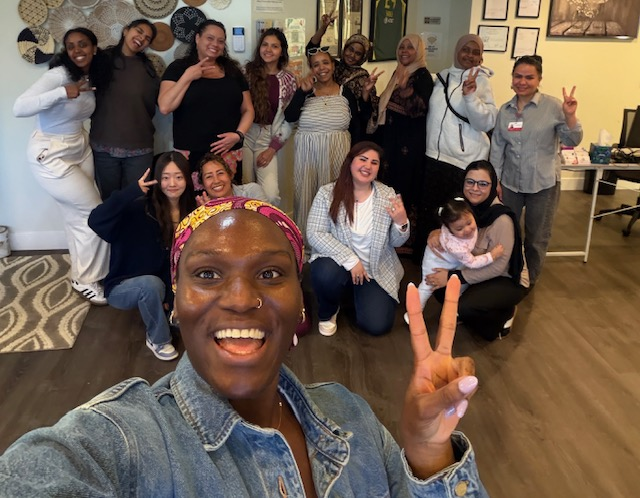
In addition to offering linguistic diversity, GPS matches clients with doulas that understand their cultural and religious backgrounds, allowing for care that feels integrated, respectful, and safe. This is not simply a question of preference: mothers who give birth in contexts where these elements are missing face worse outcomes for themselves and their babies. In addition to higher rates of c-sections, Black, migrant, and refugee mothers are more likely to experience preterm birth, low weight babies, and higher rates of morbidity and mortality for both mothers and babies.
Research published in the Journal for Maternal Health, Neonatology and Perinatology found that there are significant disparities in maternal and perinatal outcomes between Somali migrant women and host populations. In order to address this, the researchers propose, there is a need for more culturally aware obstetric services that address the specific needs of these mothers.
GPS is part of the solution to these grave problems, by providing Somali women and other populations that have faced barriers to culturally responsive care access to support that facilitates better health outcomes for moms and babies.
For example, families in the GPS Birth Doula Program had a 4.4% preterm birth rate compared to an average of 10.4% across the US, a 3.7% NICU admission rate compared to 9.8% nationally, and a 90.9% breastfeeding initiation rate compared to 84% nationwide. GPS demonstrate that doula care can be so much more than a luxury for the wealthy. It can be a lifeline for people whose circumstances are already challenging, turning pregnancy and birth from a time of stress and trauma to one of strength and empowerment.
*The Easy Access Clinic model was created by Jennie Joseph as part of the JJ Way Institute. GPS has received accreditation from the Institute to apply this model at their center.
Global Doula Project is a 501(c)(3) nonprofit on a mission to transform the way we experience birth and death by making doula support accessible and affordable to families around the world. We invite you to join our movement of care!